


The intermediate course of CA is the stage where the journey truly begins to feel real. After clearing the foundation level, many students step into CA Inter with a mix of excitement and uncertainty. The syllabus is broader, the concepts go deeper, and the pressure to perform starts to build. It is completely normal to feel confused about where to start, which subjects need more focus, or how to manage time effectively.
At this level, the intermediate course of CA is not just about studying harder, but studying smarter. Students often struggle to balance multiple subjects while also trying to understand concepts that are more practical and application-based. This is also the point where many begin to question their strategy, their preparation style, and sometimes even their career choice.
However, CA Inter is also where clarity starts to develop. With the right approach, proper understanding of the syllabus, and consistent effort, students can turn this challenging phase into a strong foundation for their future. This stage plays a crucial role in shaping not only your technical knowledge but also your discipline, mindset, and confidence as a future Chartered Accountant.
What is the Intermediate Course of CA
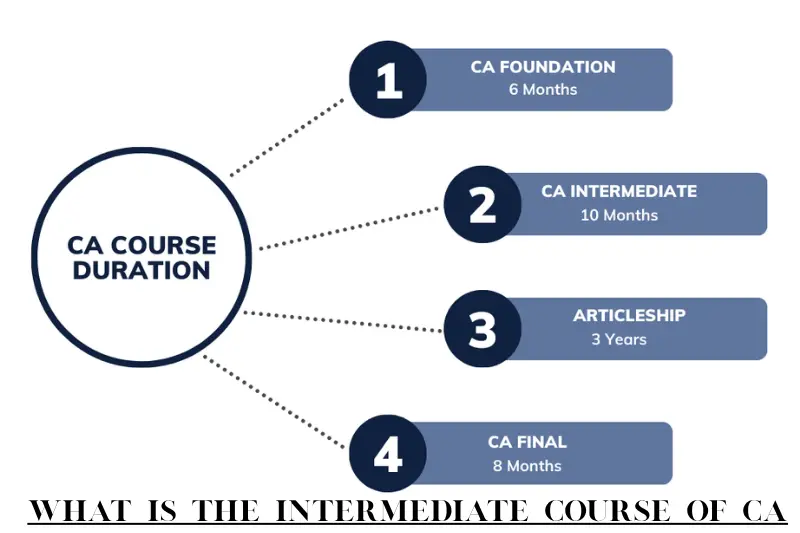
The intermediate course of CA is the second level in the Chartered Accountancy journey, and it acts as a bridge between basic concepts and advanced professional knowledge. At this stage, students move beyond fundamentals and begin to understand how accounting, taxation, and law actually work in real-world scenarios.
CA Inter is designed to build strong conceptual clarity while also introducing practical application. Unlike the foundation level, where the focus is mostly on basic understanding, this level demands deeper thinking, problem solving, and consistent practice. Many students initially find this transition challenging because the volume of content increases and the expectations become higher.
To enter the intermediate course of CA, students can either clear the foundation level or choose the direct entry route if they meet the eligibility criteria. Once registered, they are introduced to a structured system that includes multiple subjects divided into groups, regular study requirements, and a defined exam pattern.
This stage is important because it lays the groundwork for the final level and professional training. A strong grip on CA Inter concepts not only helps in clearing exams but also makes the later stages of the CA journey much smoother.
CA Intermediate Course Structure
Understanding the structure of the intermediate course of CA makes a big difference in how you plan your preparation. Many students struggle not because the syllabus is impossible, but because they do not fully understand how CA Inter is organized.
The CA Inter level is divided into two groups, and each group contains multiple subjects. Students have the option to appear for one group at a time or both groups together, depending on their preparation and confidence level. This flexibility allows you to plan your attempt based on your strengths and study capacity.
Each group in CA Inter includes a mix of practical and theory based subjects. Some papers require strong conceptual clarity and problem solving practice, while others test your understanding and presentation skills. This balance is intentional, as the intermediate course of CA is designed to prepare you for real professional scenarios.
The exams are conducted multiple times a year, giving students more than one opportunity to clear their papers. However, this also means competition is high, and consistent preparation becomes essential. Many students underestimate the importance of planning their attempt wisely, which often leads to unnecessary pressure.
Another important part of the structure is the passing criteria. Students must score a minimum required mark in each subject along with an overall aggregate in the group. This means you cannot rely on just one strong subject to carry you through. Balanced preparation across all ca inter subjects is key to success.
Once you clearly understand how the ca inter syllabus is structured and how the exams are conducted, it becomes much easier to create a realistic study plan and avoid last minute confusion.
CA Intermediate Syllabus Detailed Breakdown
The CA Intermediate syllabus is often the first thing that overwhelms students, and honestly, that reaction is completely understandable. When you first look at the intermediate course of CA, it can feel like there is too much to cover in too little time. But once you break it down into groups and subjects, it starts to feel much more manageable.
The ca intermediate syllabus is divided into two groups, each designed to test different skill sets. Some subjects focus more on calculations and problem solving, while others require strong conceptual understanding and presentation.
Group 1
Group 1 is usually considered the starting point for most students because it builds the core foundation.
- Accounting
This subject forms the backbone of the CA journey. It requires regular practice and strong conceptual clarity. Students who stay consistent with practice usually find it scoring. - Corporate and Other Laws
A theory-based subject that focuses on understanding legal provisions. Instead of memorizing everything, students should focus on clarity and proper presentation in exams. - Taxation
This subject includes both direct and indirect taxes. It is practical but also concept-driven, which means regular revision and updates are important.
Group 2
Group 2 is slightly different in nature and often feels more technical for many students.
- Cost and Management Accounting
A practical subject that involves calculations, logic, and application. Daily practice is essential to build confidence and accuracy. - Auditing and Ethics
A theory-heavy subject where understanding concepts matters more than rote learning. Students often struggle here if they try to memorize without understanding. - Financial Management and Strategic Management
This is a combination of numerical and theory. Financial management requires problem solving skills, while strategic management focuses on concepts and case-based understanding.
The key to handling the ca inter syllabus is not trying to complete everything quickly, but building a consistent study routine. Once you understand how each subject fits into the intermediate course of CA, it becomes much easier to plan your preparation and avoid unnecessary stress.
CA Inter Subjects Explained
Once you go through the ca inter syllabus, the next challenge is actually understanding how each subject behaves. Many students make the mistake of treating all subjects the same, but in reality, every subject in CA Inter requires a slightly different approach.
A clear understanding of ca inter subjects helps you plan better, reduce stress, and avoid wasting time on ineffective study methods.
Accounting
This is one of the most important subjects in the intermediate course of CA. It is completely practical and demands consistent practice. Concepts are not very difficult, but the volume is high. The more questions you solve, the more confident you become.
Corporate and Other Laws
This subject is theory-based, but it is not just about memorizing sections. Students who understand the logic behind provisions perform much better. Writing practice is equally important because presentation can make a big difference in scores.
Taxation
Taxation is a mix of concepts and practical application. It includes direct tax and indirect tax, both of which require regular updates and revision. Many students find it tricky at first, but with practice, it becomes manageable and even scoring.
Cost and Management Accounting
This subject is all about logic and calculations. It may seem confusing initially, especially for students who are not comfortable with numbers, but once you understand the formulas and concepts, it becomes easier. Practice is the key here.
Auditing and Ethics
Auditing is one of the subjects where students often struggle because they rely too much on rote learning. Instead, focusing on understanding concepts and using simple language in answers can improve performance significantly.
Financial Management and Strategic Management
This subject is divided into two parts. Financial management is numerical and requires problem solving skills, while strategic management is theory-based and focuses on concepts. Balancing both parts properly is important.
The biggest mistake students make in ca inter is not adapting their study style according to each subject. The intermediate course of CA is designed to test different skills, so your preparation should also be flexible. Once you understand the nature of each subject, your study process becomes much smoother and more effective.
Best CA Inter Study Material
Choosing the right resources can make a huge difference in how you prepare for the intermediate course of CA. One of the biggest mistakes students make is collecting too many books and materials, thinking more resources will lead to better results. In reality, it often creates confusion and slows down revision.
When it comes to ca inter study material, keeping it simple and focused is usually the best approach.
ICAI Study Material
The most important and reliable source is the official ICAI study material. It is designed according to the exam pattern and covers the entire ca inter syllabus in a structured way. Most successful students rely heavily on this material because exam questions are often based on it, either directly or conceptually.
Practice Manuals and Question Banks
After understanding concepts, practice becomes essential. Question banks and practice manuals help you apply what you have learned. They also give you an idea of how questions are framed in exams and how to manage time while solving them.
Revision Notes
Short notes are extremely useful, especially during the last few weeks before exams. Instead of going through full books again, revision notes help you quickly recall important concepts, formulas, and key points.
Mock Test Papers
Mock tests are often ignored, but they play a critical role in preparation. They help you evaluate your performance, identify weak areas, and improve your writing speed and accuracy. Regular testing also builds confidence.
Online Lectures and Classes
For students who struggle with self-study or complex topics, online lectures can be helpful. However, it is important not to depend entirely on them. They should support your preparation, not replace your own effort.
The key to using ca inter study material effectively is not how much you study, but how well you revise and practice. A focused approach with limited but high-quality resources is always more effective than trying to cover everything available.
How to Prepare for CA Intermediate Course
Preparing for the intermediate course of CA is not just about long study hours. It is more about having the right strategy, staying consistent, and understanding what actually works for you. Many students feel stuck not because they are not मेहनती, but because they follow an unstructured approach.
If you plan your preparation smartly, even the vast ca inter syllabus becomes manageable.
Build a Realistic Study Plan
Start with a practical study plan instead of an overly ambitious one. Divide your time between all ca inter subjects and make sure you are not ignoring any paper. Give more time to subjects you find difficult, but do not completely skip your stronger areas.
A balanced plan always works better than focusing on just one group or subject.
Focus on Conceptual Clarity
In CA Inter, understanding concepts is more important than memorizing. Whether it is accounting, taxation, or auditing, clarity will help you solve different types of questions in exams. If your basics are strong, revision becomes much easier.
Daily Practice is Non Negotiable
For practical subjects, regular practice is the only way to improve. Solving questions daily builds speed, accuracy, and confidence. Even theory subjects require writing practice so that you can present your answers clearly in exams.
Create a Strong Revision Strategy
One of the biggest reasons students fail in ca inter is poor revision. Reading once is never enough. Plan multiple revisions before your exam attempt. Short notes and summaries can help you revise quickly without feeling overwhelmed.
Take Mock Tests Seriously
Mock tests are not just for checking knowledge, they prepare you for the real exam environment. They help you manage time, improve answer presentation, and reduce exam fear. Try to attempt papers in a proper exam-like setting.
Stay Consistent and Avoid Burnout
Consistency matters more than studying for long hours occasionally. Even 5 to 6 focused hours daily can give better results than irregular study patterns. At the same time, take short breaks to avoid burnout and keep your mind fresh.
Preparing for the intermediate course of CA can feel challenging at times, but with the right approach, it becomes much more structured and less stressful. The key is to stay disciplined, follow a plan, and keep improving your strategy as you move forward.
Common Mistakes Students Make in CA Inter
While preparing for the intermediate course of CA, many students work hard but still struggle to get results. The issue is not always effort, but the direction of that effort. Understanding common mistakes early can save a lot of time and frustration during your ca inter journey.
Ignoring ICAI Material
One of the biggest mistakes is not giving enough importance to ICAI study material. Many students depend too much on reference books or coaching notes and skip the official content. However, most exam questions are directly or indirectly based on ICAI material, so ignoring it can create gaps in preparation.
Lack of Revision
Students often focus on completing the syllabus but fail to revise it properly. In ca inter subjects, revision is what turns understanding into performance. Without multiple revisions, even well-prepared topics can be forgotten during exams.
Poor Time Management
Another common issue is not managing time properly between subjects. Spending too much time on one subject and neglecting others leads to imbalance. Since the ca inter syllabus is wide, equal attention to all subjects is important.
Rote Learning Without Understanding
Especially in theory subjects like auditing and law, many students try to memorize everything. This approach does not work in the long run. Understanding concepts and writing answers in your own words always gives better results.
Not Practicing Enough Questions
In practical subjects, reading alone is not enough. Without solving questions regularly, students struggle with speed and accuracy in exams. Practice is what builds confidence in subjects like accounting, cost, and financial management.
Ignoring Mock Tests
Some students avoid mock tests because they fear low scores. But mock tests are meant to identify weaknesses, not judge performance. Skipping them means missing an important part of exam preparation.
Avoiding these mistakes can significantly improve your preparation for the intermediate course of CA. Small corrections in strategy often lead to big improvements in results, especially in a competitive exam like ca inter.
Tips to Clear CA Inter in First Attempt
Clearing the intermediate course of CA in the first attempt is challenging, but it is definitely achievable with the right mindset and strategy. Many students believe it requires extraordinary intelligence, but in reality, it is more about consistency, discipline, and smart preparation.
If you approach ca inter in a planned way, you can significantly improve your chances of success.
Start Early and Stay Consistent
One of the most effective strategies is starting your preparation early. CA Inter has a vast ca inter syllabus, and rushing at the last moment creates unnecessary pressure. Consistent daily study, even for a few hours, is far more effective than irregular long study sessions.
Understand Before You Memorize
Instead of memorizing everything, focus on understanding concepts. This is especially important in subjects like accounting, taxation, and financial management. Once your basics are clear, revision becomes easier and faster.
Make Short and Smart Notes
Preparing your own revision notes helps you save time during final preparation. These notes should include formulas, key concepts, and important points from each ca inter subject. They become extremely useful during revision phases.
Practice Regularly and Improve Speed
Practice is the key to success in the intermediate course of CA. Solving questions regularly helps you improve accuracy and speed. It also helps you understand how to apply concepts in different types of questions.
Revise Multiple Times
Revision is not optional in CA Inter. You should plan at least two to three revisions before exams. Each revision strengthens your memory and improves confidence. Without revision, even well-studied topics can be forgotten.
Attempt Mock Tests Seriously
Mock tests help you simulate real exam conditions. They improve time management, answer presentation, and exam temperament. Treat every mock test like the final exam to get maximum benefit.
Stay Focused and Avoid Comparisons
Every student has a different learning pace. Comparing yourself with others can reduce confidence. Focus on your own preparation and improve step by step. Consistency matters more than competition during ca inter preparation.
Clearing CA Inter in the first attempt is not about studying more, but studying in the right way. With discipline, proper planning, and consistent effort, the intermediate course of CA becomes much more manageable and achievable.
Frequently Asked Questions (FAQs)
This section clears some of the most common doubts students have about the intermediate course of CA. These questions often come up during preparation and understanding them early can help you plan better for ca inter.
What is the syllabus of CA Intermediate course?
The ca inter syllabus is divided into two groups, each containing three subjects. It includes accounting, corporate laws, taxation, cost and management accounting, auditing, financial management, and strategic management. Each subject is designed to build both conceptual and practical understanding.
How many subjects are there in CA Inter?
There are a total of six main ca inter subjects divided into two groups. Each group has three subjects, and students can choose to attempt one group or both groups together depending on their preparation level.
Which study material is best for CA Inter?
The most reliable ca inter study material is the official ICAI material. It covers the entire syllabus and is highly relevant for exams. Along with that, practice manuals, revision notes, and mock test papers are also very helpful for preparation.
Is CA Intermediate difficult?
The intermediate course of CA is considered challenging because of its wide syllabus and depth of concepts. However, with proper planning, consistent study, and regular revision, it becomes manageable. The difficulty depends more on preparation strategy than the subjects themselves.
How much time is needed to prepare for CA Inter?
Preparation time varies from student to student, but generally 8 to 10 months of focused study is considered ideal. The key is not just time, but how effectively you use it across all ca inter subjects.
Can CA Inter be cleared in the first attempt?
Yes, many students clear ca inter in the first attempt with disciplined study, proper revision, and consistent practice. A smart strategy is more important than long study hours.
Conclusion
The intermediate course of CA is a major turning point in the journey of becoming a Chartered Accountant. It is the stage where students move beyond basic concepts and start dealing with a deeper, more practical level of understanding across all ca inter subjects.
Although the ca inter syllabus may feel heavy at first, it becomes manageable when you approach it with a clear plan, consistent effort, and the right study strategy. The key is not to rush through topics but to build strong conceptual clarity and revise regularly.
Choosing the right ca inter study material, practicing questions daily, and focusing on steady revision can make a big difference in your performance. Most importantly, success in CA Inter is not about studying more hours, but about studying in a structured and disciplined way.
If you stay consistent, avoid common mistakes, and keep improving your approach, clearing CA Inter becomes an achievable goal rather than an overwhelming challenge.
